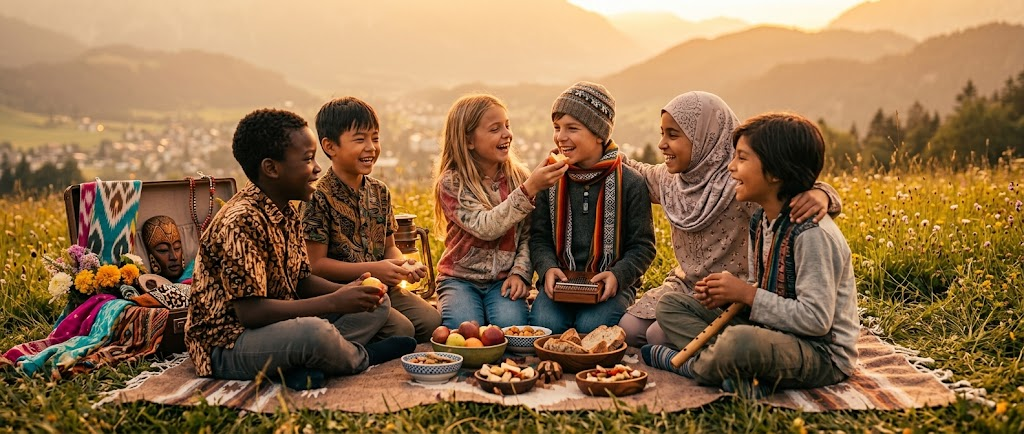
On TikTok, thousands of people use a term to explain something they didn't know how to name before: Third Culture Kid. It is used by those who grew up — or live — between two or more cultures, feeling they don't fully belong to any one place.
If you have ever felt that way, I want to share something important: it isn't new, and you are far from alone. It has had a name for more than 60 years.
Where the concept originated
In the 1950s, sociologist Ruth Hill Useem traveled to India alongside her husband to study American expat families. What she discovered astonished her: the children in those families did not live as they would in the United States, nor did they live like local Indian peers. They had constructed, spontaneously, a distinct way of living — a "third culture," created from pieces of both worlds. Thus was born the phrase trending today: Third Culture Kid.
The quiet grief no one explained
Years later, psychiatrist Joseba Achotegui examined this experience from an emotional perspective. He identified seven fundamental losses that accompany relocation — family, native language, culture, land, social status, peer belonging, and the vulnerabilities of the voyage itself.
That feeling of "I'm not from here nor there" is, at its root, the grief of belonging. It is one of the quietest transitions because it isn't visible on the surface. It surfaces in subtle moments: when you pause before answering "where are you from?". When you miss a homeland that has already changed in your absence. When you celebrate life in your own unique way and feel those around you don't fully get it.
You don't lack a place. You authored a new one.
Here is where I invite you to shift the narrative: you don't belong less. You belong differently. That intermediate space isn't an empty void — it is a rich territory of your own. Nobody else carries your exact blend of resilience and heritage. That doesn't subtract from your identity. It multiplies it.
An exercise to begin naming your truth
Next time you feel that "not from here nor there" sensation, instead of asking yourself "where do I belong?", ask: "what have I built that did not exist before I migrated?". Write down three things — new traditions, ways of thinking, friendships, even words you weave across languages. What you wrote is not what you lost. It is what you gained.

Yarima García
Coach specialized in migratory grief and cultural adaptation · São Paulo, Brazil